Learn Daoist wisdom from the root outward.
Start with Dao, then follow the branches: Tao Te Ching notes, Yi Ching reflections, Yin-Yang and Five Elements guides, seasonal rhythm, and practical cultivation without turning the tradition into fortune-telling.
A grounded learning path for Dao, pattern, and practice.
The Eastern Elements Library is organized around one principle: Dao is the source, and the other systems are ways to notice change, timing, relationship, and conduct.
- Read Daoist concepts first so later symbols do not become loose personality labels.
- Use Yin-Yang, Five Elements, and Yi Ching as pattern language for change.
- Turn learning into one small practice through reflection, breath, journaling, or seasonal timing.
How to use the Library
Read it as a path: source, pattern, practice.
Eastern Elements is built from Dao outward. The Library is meant to help a new reader move from source ideas into usable pattern language, then into a small practice that can be tested in ordinary life.
Begin with Dao
Start from the root vocabulary: Dao, De, Wu Wei, Ziran, Pu, and Qi. These words keep the rest of the site from becoming a loose collection of personality labels.
Open sourcePatternRead movement
Use Yin-Yang, Five Elements, and Yi Ching as pattern languages for change: how things rise, settle, meet pressure, and return.
Read patternsPracticeTest one small action
Turn study into breath, journaling, seasonal rhythm, and daily conduct. A useful tradition should change attention, not just add vocabulary.
Try practicePopular questions
Begin where a real question is already pulling you.
Search and Quora visitors rarely arrive in textbook order. These question-led paths give a beginner a useful first answer, then connect that answer back to the wider Daoist foundation.
What are the Five Elements, and how do they affect life?
Start with Wood, Fire, Earth, Metal, and Water as five movements of change, then continue to the free reading if you want a personal mirror.
Open Five ElementsWu WeiWhat does Wu Wei really mean?
Read non-forcing as skillful timing and cleaner action, not laziness, passivity, or doing nothing.
Read Wu WeiYi ChingIs the Yi Ching fortune telling?
A responsible answer that respects the oracle history while explaining how Eastern Elements uses hexagrams as reflective images.
Read answerBeginner pathWhere should I begin with Daoist wisdom?
Start with Dao, then follow Yin-Yang, Five Elements, Tao Te Ching, Yi Ching, and daily practice without getting lost.
Start hereChoose by need
Use the route that matches why you arrived.
Strong learning sites do not make every visitor choose from a flat list. This path helps beginners, skeptics, text readers, and source-checkers enter through the door that fits their question.
I want something about me.
Begin with the free Five Elements reading, then use the Library to understand the pattern language behind the result.
Best for visitors who need an immediate doorway before study.Classical textI want to read the Tao Te Ching.
Start with the text hub before individual chapters, so Dao, De, Wu Wei, water, and softness have a shared frame.
Best for readers who want source work without academic overload.Trust boundaryI am unsure whether this is fortune telling.
Read the responsible-use boundary first, then move into the Yi Ching guide if the reflective approach feels right.
Best for skeptical or cautious visitors.Source checkI want to know what this is based on.
Review the source map and editorial method before choosing a learning path, reading, or practice.
Best for visitors comparing Eastern Elements with vague wisdom sites.Daoist foundation
Start from Dao, then read the branches.
The Library is organized around a simple hierarchy: Dao is the root; Yin-Yang, Five Elements, Yi Ching, seasonal rhythm, and practice are ways of seeing how the Dao moves through change, conduct, and daily life.
Core Daoist concepts
Study Dao, De, Wu Wei, Ziran, Pu, and Qi through classical anchors, scholarly sources, and careful modern use.
Open foundationDaoThe Way before the method
Begin with the root idea: less forcing, clearer attention, and a more natural response to the shape of things.
Open foundationBeginner questionTao vs. Dao
Clear the spelling confusion first: Taoism, Daoism, Tao Te Ching, and Daodejing all point back to the same root word.
Open foundationCultivationPractice as return
Daoist learning becomes real through breath, posture, moderation, and repeated small returns to balance.
Open foundationTextTao Te Ching as source
Read the Mawangdui tradition as a quiet foundation for non-forcing, softness, simplicity, and enoughness.
Open foundationLearning paths
Four ways to enter without getting lost.
The goal is not to make visitors read everything. Give them a first doorway, then let curiosity carry them deeper through texts, symbols, and practice.
Tao Te Ching
Start with the Dao: plain-English notes, Mawangdui context, and small practices for non-forcing.
Open pathReflection SystemYi Ching
Use the hexagrams as images for timing, conflict, waiting, beginning, and careful decision-making.
Open pathPattern LanguageFive Elements
Learn Wood, Fire, Earth, Metal, and Water as movements of growth, expression, grounding, refinement, and depth.
Open pathDaily LayerPractice
Turn ideas into breath, journaling, seasonal awareness, and gentle cultivation routines.
Open path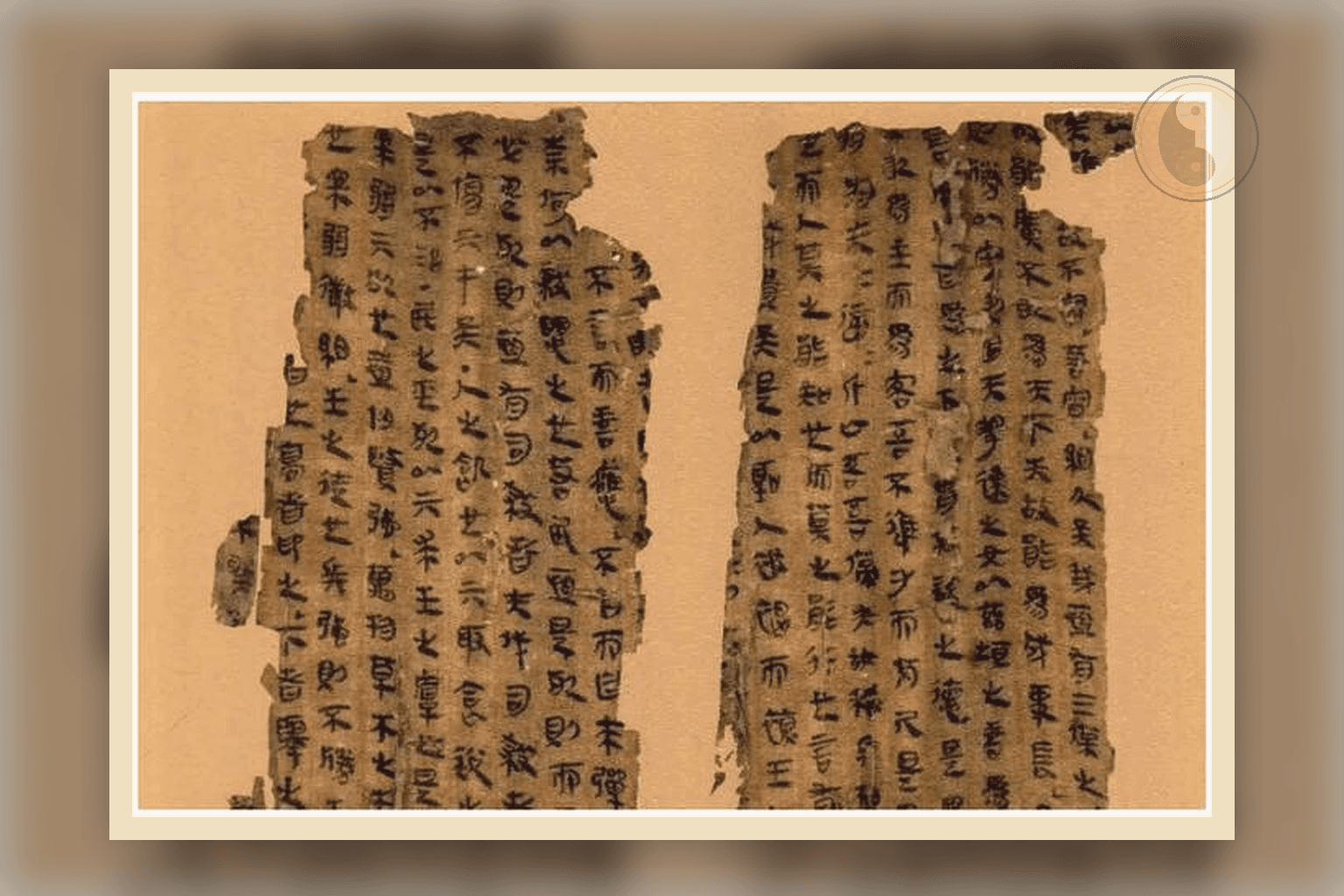 帛书老子
帛书老子Mawangdui Tao Te Ching for modern readers
This is the strongest cultural foundation for the site: a serious but accessible doorway into non-forcing, simplicity, enoughness, softness, and daily balance.
Yi Ching reflections for modern life
A video-led learning path for the hexagrams, starting with the first six published reflections. Each page pairs a short video with clear notes, a transcript, and one small practice.
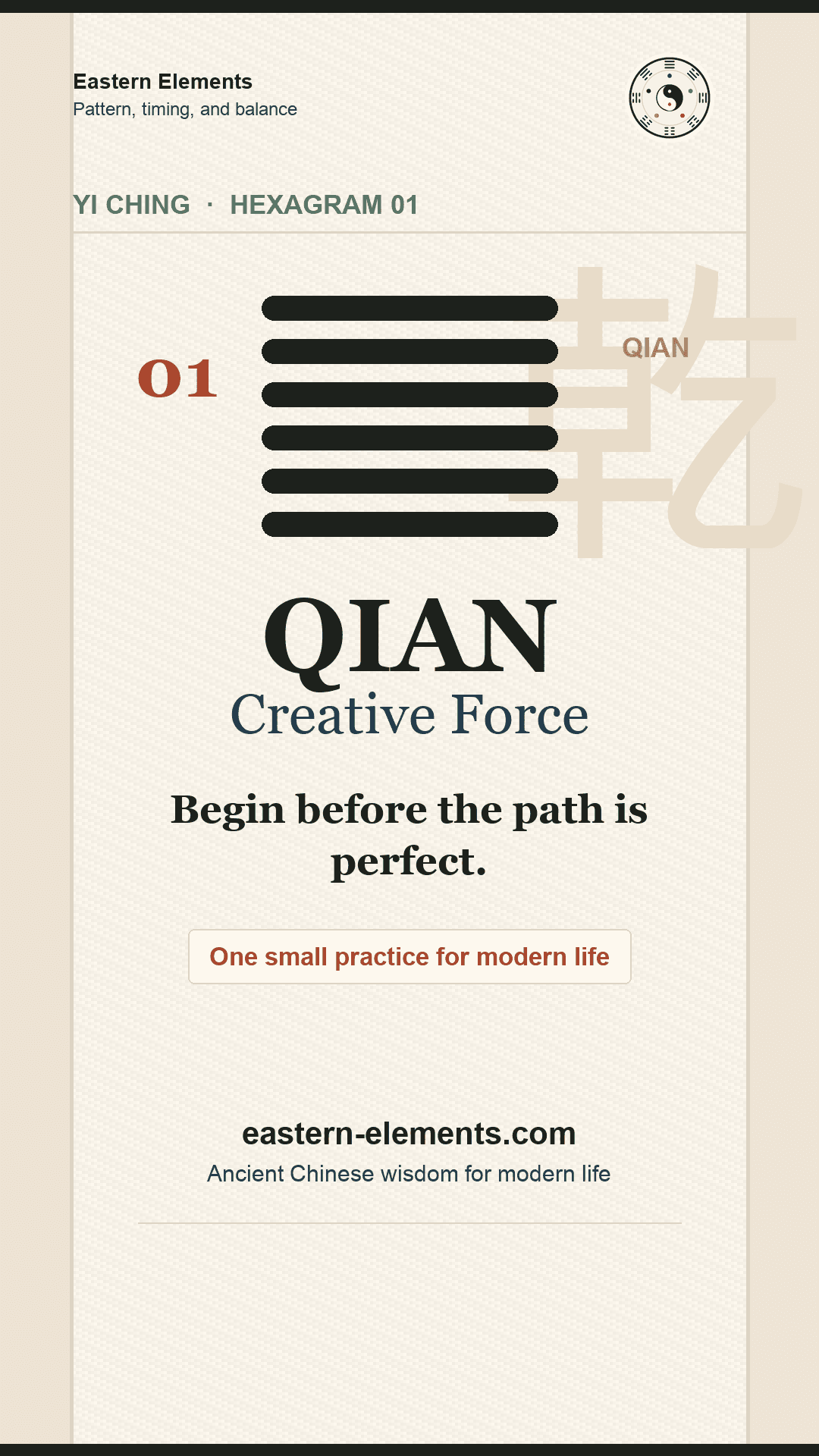 Qian / Creative Force
Foundations
Build a quiet foundation
These guides explain the ideas that support the reading tool and future products: classical roots, modern clarity, and careful educational boundaries.

Yin-Yang 阴阳
The classical idea of complementary movement: light and dark, activity and rest, expansion and return.
Read guide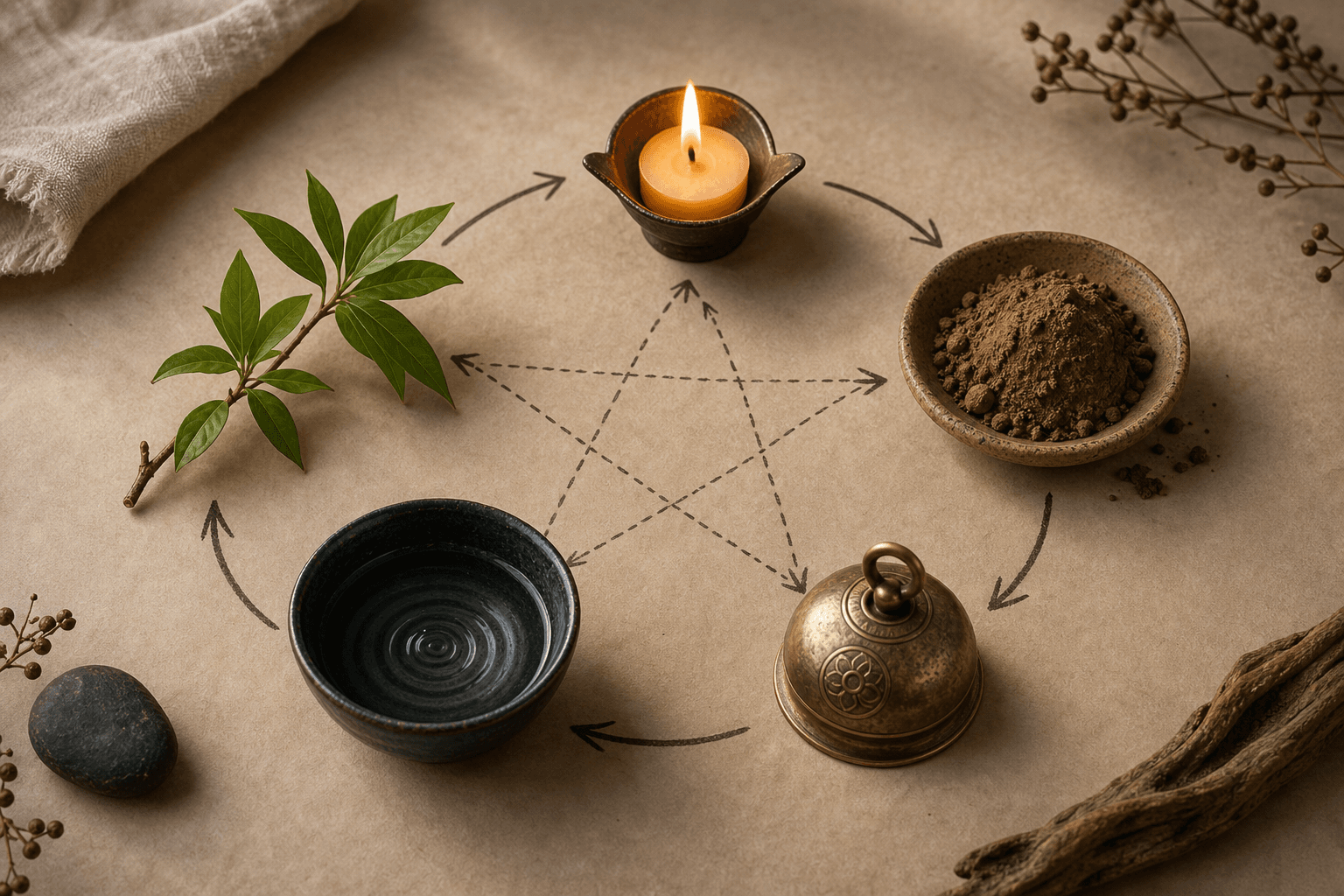
Five Elements 五行
Wood, Fire, Earth, Metal, and Water as five movements of qi, not merely five physical materials.
Read guide
24 Solar Terms 二十四节气
A classical Chinese seasonal calendar that turns the year into 24 small invitations for timing, awareness, and daily cultivation.
Read guide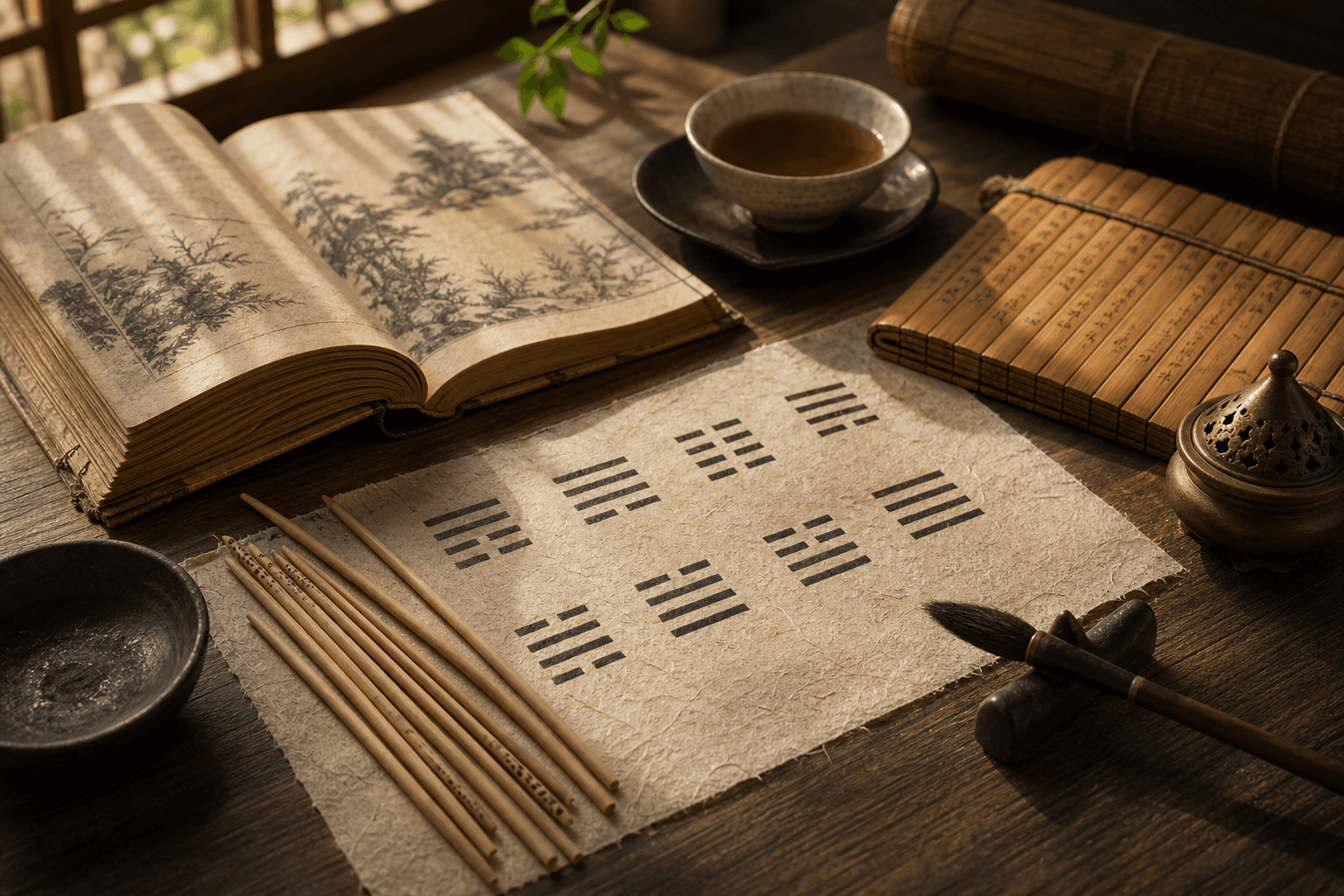
Eight Trigrams 八卦
Eight natural images that connect Yin-Yang lines with Ba Gua, Yi Ching hexagrams, and careful reflection on change.
Read guide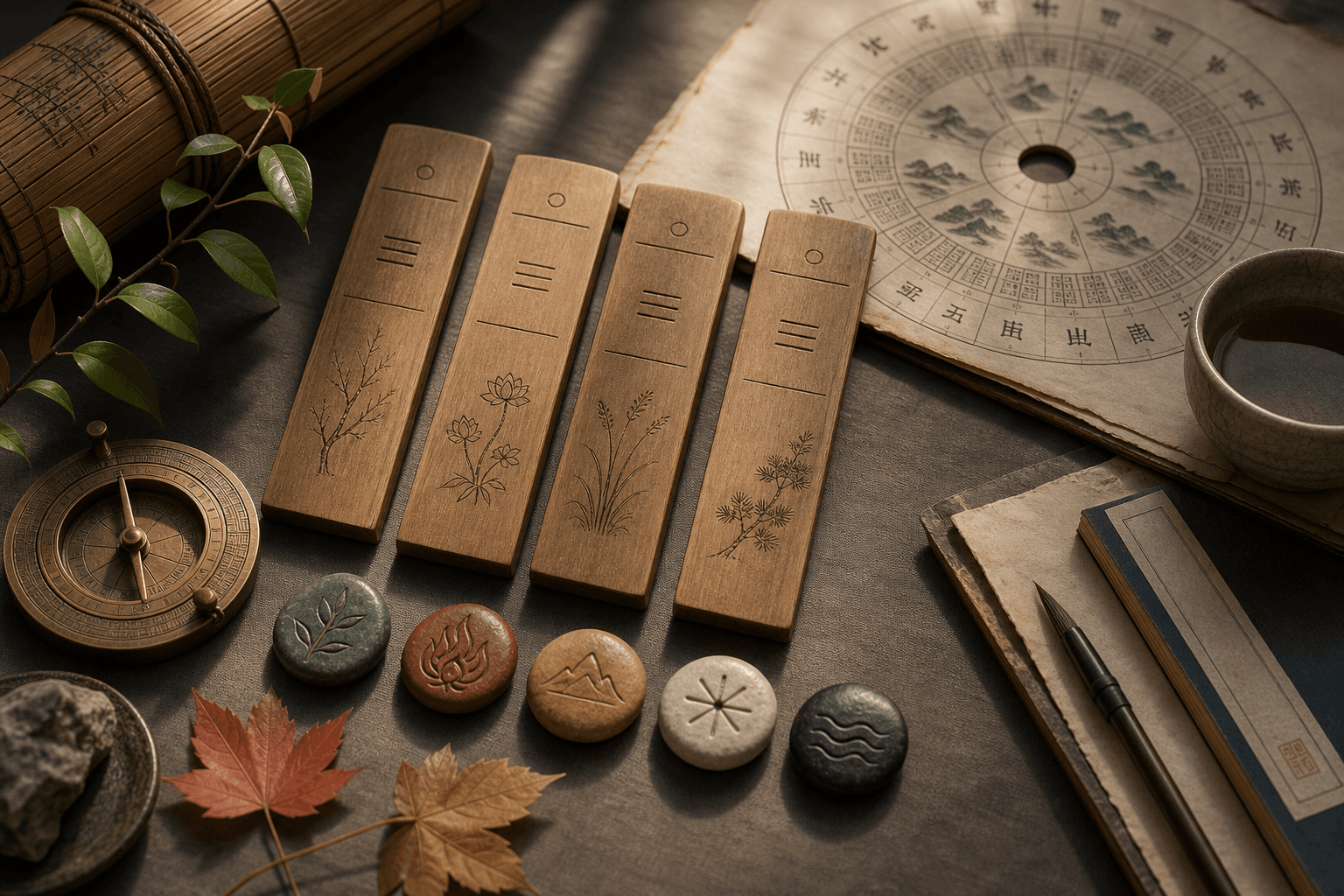
Yi Ching 易经
A classical book of change and reflection, with a practical beginner method for questions, changing lines, and careful action.
Read guide
BaZi 八字
A Four Pillars birth-chart tradition that reads time, seasonality, and elemental structure.
Read guide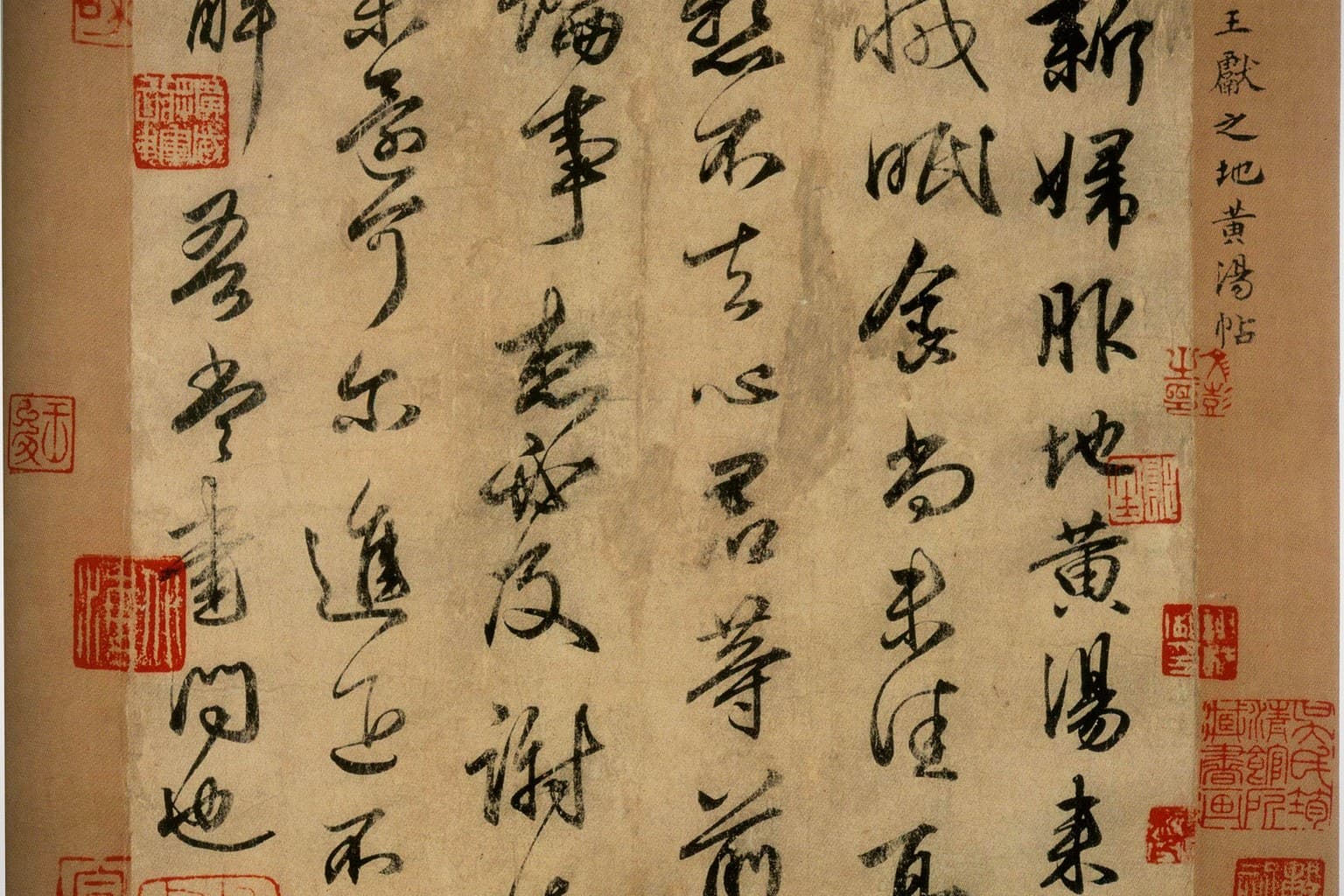
Chinese Idioms 成语与谚语
Short sayings and four-character idioms that preserve stories, practical judgment, and everyday Chinese moral imagination.
Read guide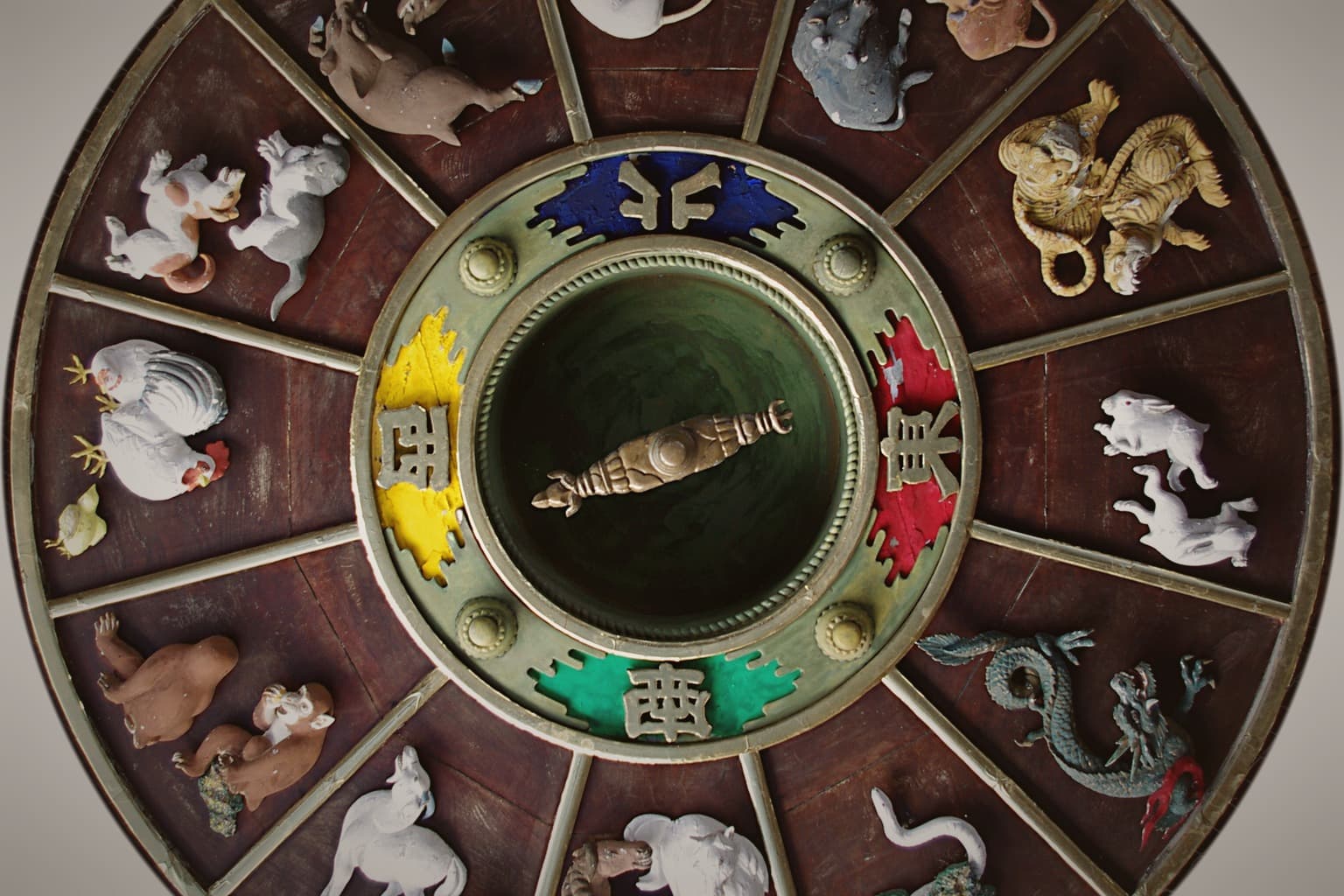
Chinese Zodiac 生肖
The twelve animals as a cultural cycle of time, memory, personality imagery, and seasonal storytelling.
Read guide
Taoism For Beginners 道家入门
A practical beginner doorway into Dao, wu wei, water-like flexibility, simplicity, and a 7-day path for living with less unnecessary force.
Read guideTao vs. Dao 道的拼写
Why Taoism and Daoism usually point to the same Chinese word, and how beginners can read both spellings without confusion.
Read guideWhat Is The Tao Te Ching? 《道德经》入门
A careful beginner guide to the Tao Te Ching, Dao, De, Laozi, Mawangdui manuscripts, and why the text is read here as reflection rather than fortune-telling.
Read guideDaoist Cultivation 道家修养
A gentle introduction to Daoism, cultivation, breath, posture, attention, moderation, and returning to balance.
Read guideLibrary FAQ
How to read this library responsibly
The site is built for cultural learning and reflective practice. It stays away from fixed-fate claims.
What is the Eastern Elements Library?
It is a beginner-friendly learning library for Daoist wisdom and classical Chinese pattern language, including Dao, Tao Te Ching, Yi Ching, Yin-Yang, Five Elements, seasonal living, and daily practice.
Where should a beginner start?
Start with Dao or Taoism for Beginners if you want the root idea, Tao Te Ching if you want source text, Five Elements if you want pattern language, or the free reading if you want a personal reflection entry.
How are Dao, Yi Ching, and Five Elements connected?
Eastern Elements treats Dao as the root, Yin-Yang as the first pattern of change, Five Elements as five recurring movements, and Yi Ching as a symbolic reflection system for timing and decision-making.
Is the Library about fortune telling?
No. The Library uses these traditions for cultural learning, self-reflection, and careful daily practice, not prediction, guaranteed outcomes, or professional advice.