Move without forcing
The first rule is restraint. Keep the range comfortable, avoid sharp pain, and let the practice stay easy enough to repeat.
Baduanjin is introduced here as a traditional Chinese movement practice: a quiet sequence of eight exercises for posture, breath, rhythm, and attention. The focus is cultural learning and safe beginner orientation, not medical claims.
Practice principles
The first version establishes editorial boundaries, safety language, and a movement structure that can later support photography, animation, or video.
The first rule is restraint. Keep the range comfortable, avoid sharp pain, and let the practice stay easy enough to repeat.
Beginners do not need complicated breath control. Breathe quietly, keep the throat soft, and let the movement set a steady pace.
Keep the knees unlocked, shoulders relaxed, and spine long. The goal is clear alignment, not dramatic stretching.
Baduanjin fits Eastern Elements as a simple return to body, rhythm, and attention before deeper study or audio practice.
Eight movements
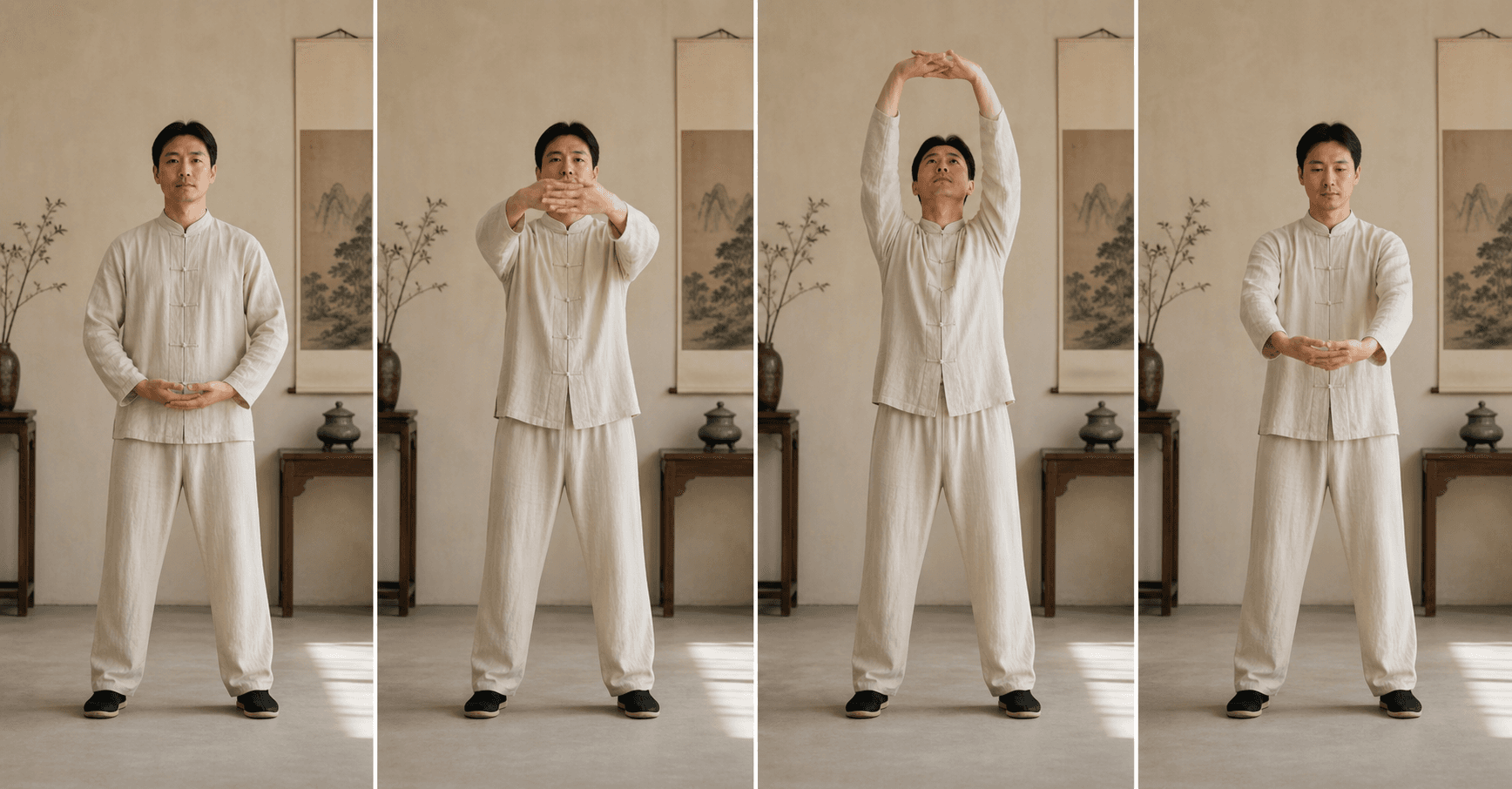
This overview now gives the full eight-movement sequence as original visual references. The first movement has a detailed page; the others can expand into dedicated pages next.
A lifting and lengthening movement often used as the opening gesture of the sequence.
Open movement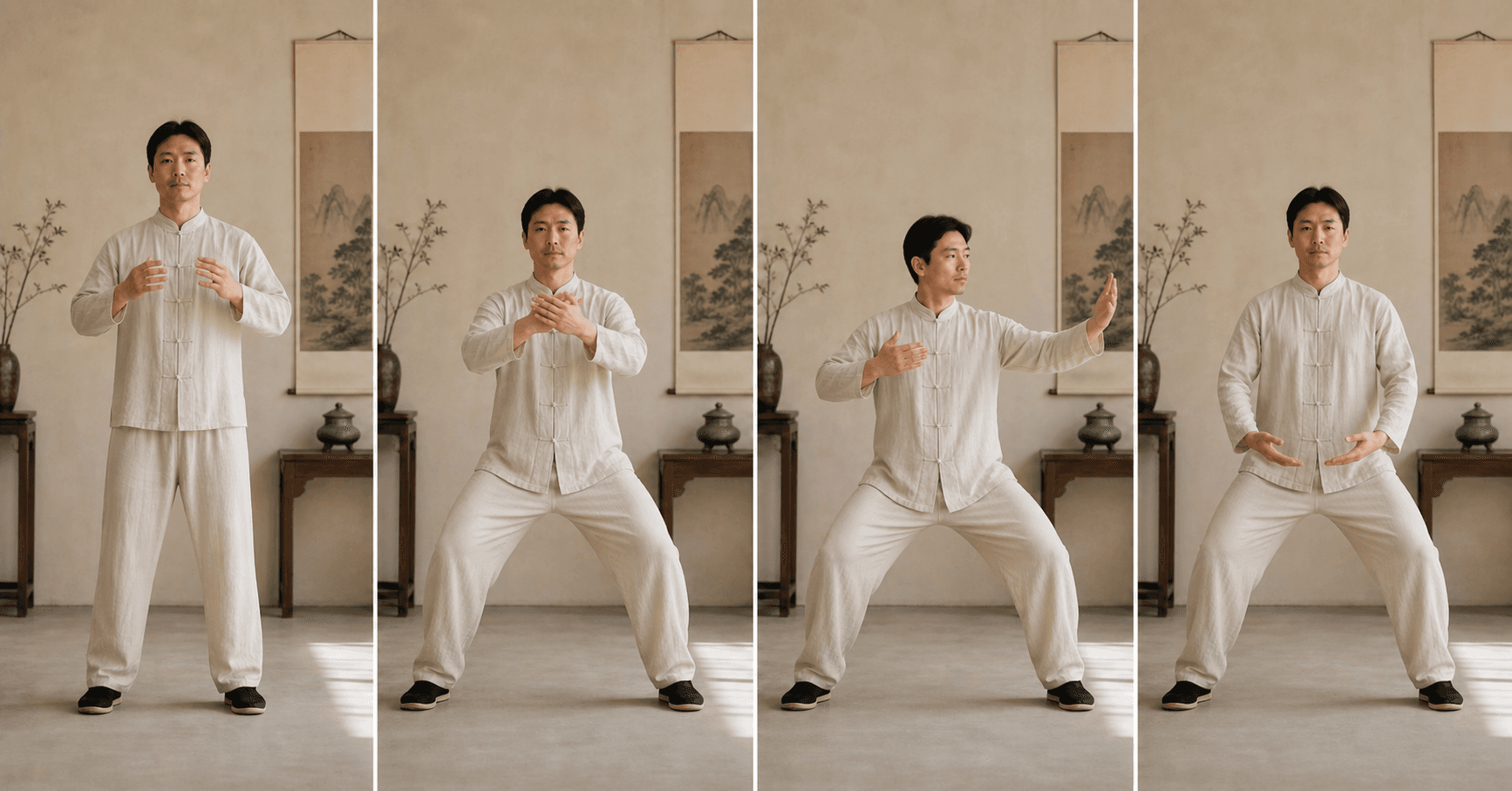
A side-opening movement that coordinates stance, breath, gaze, and a bow-like arm shape.
Full detail page next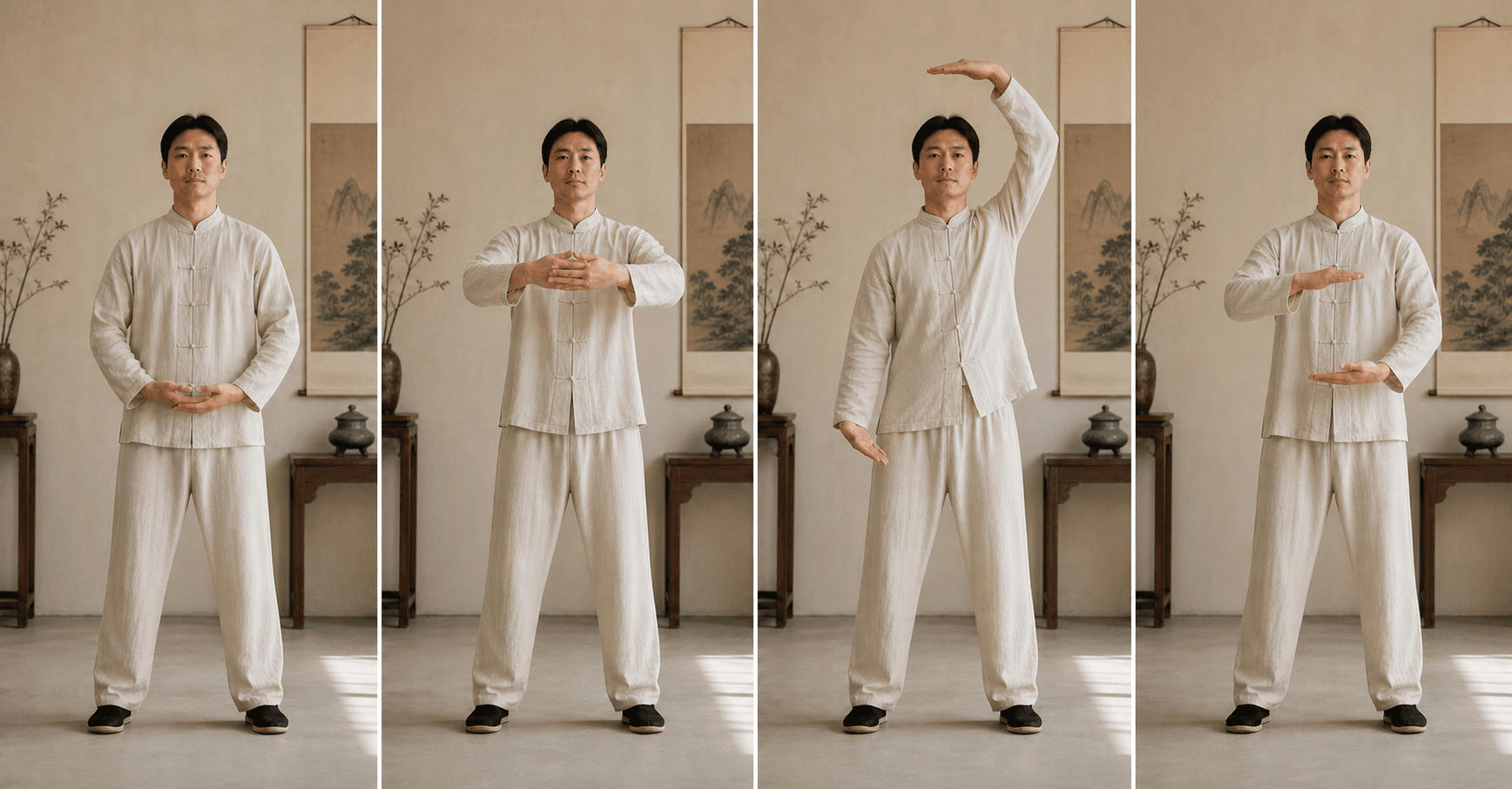
One palm rises while the other settles, creating a clear vertical stretch through the center.
Full detail page next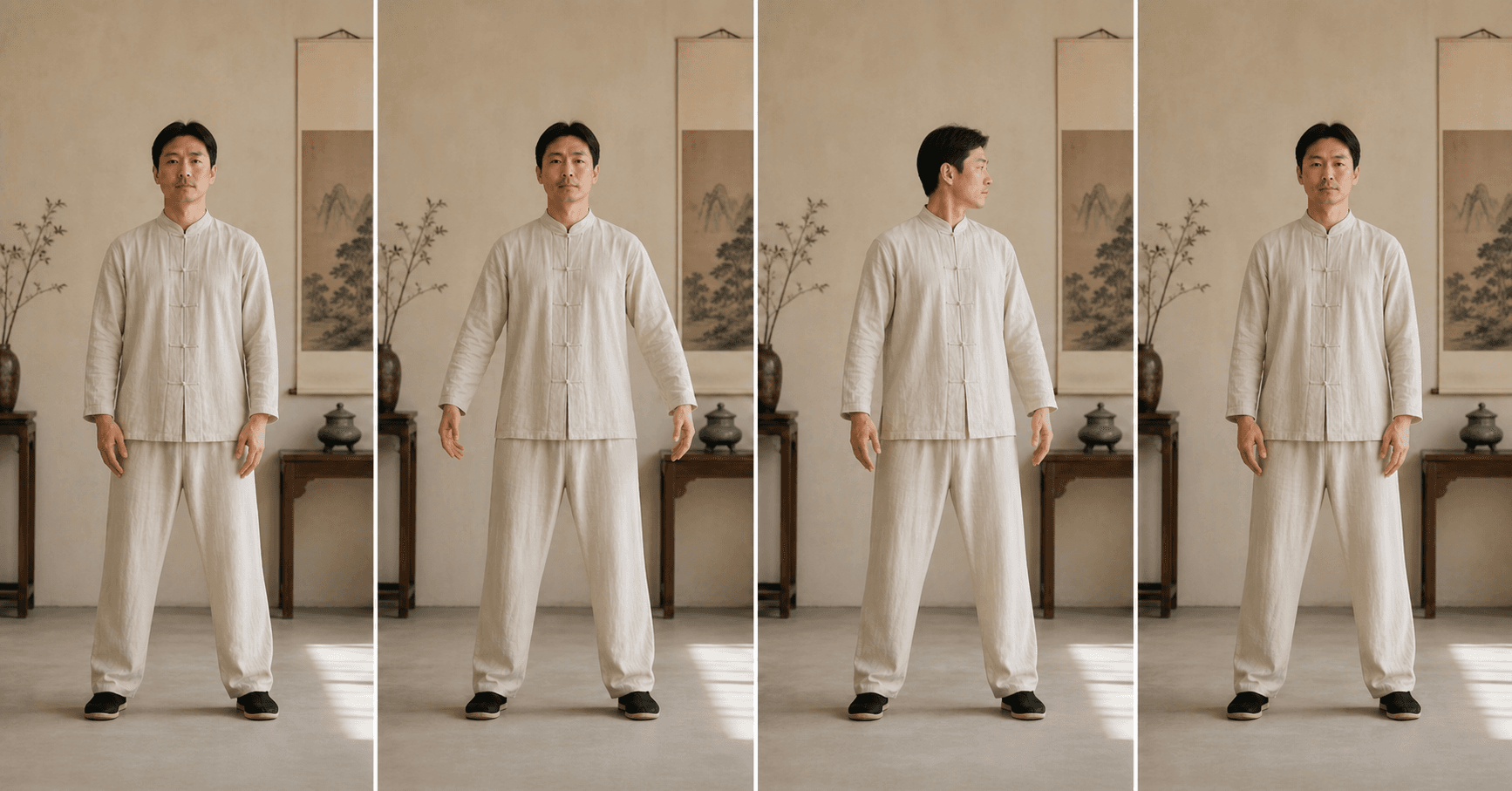
A gentle turning pattern that asks the neck and upper body to move with care, not speed.
Full detail page next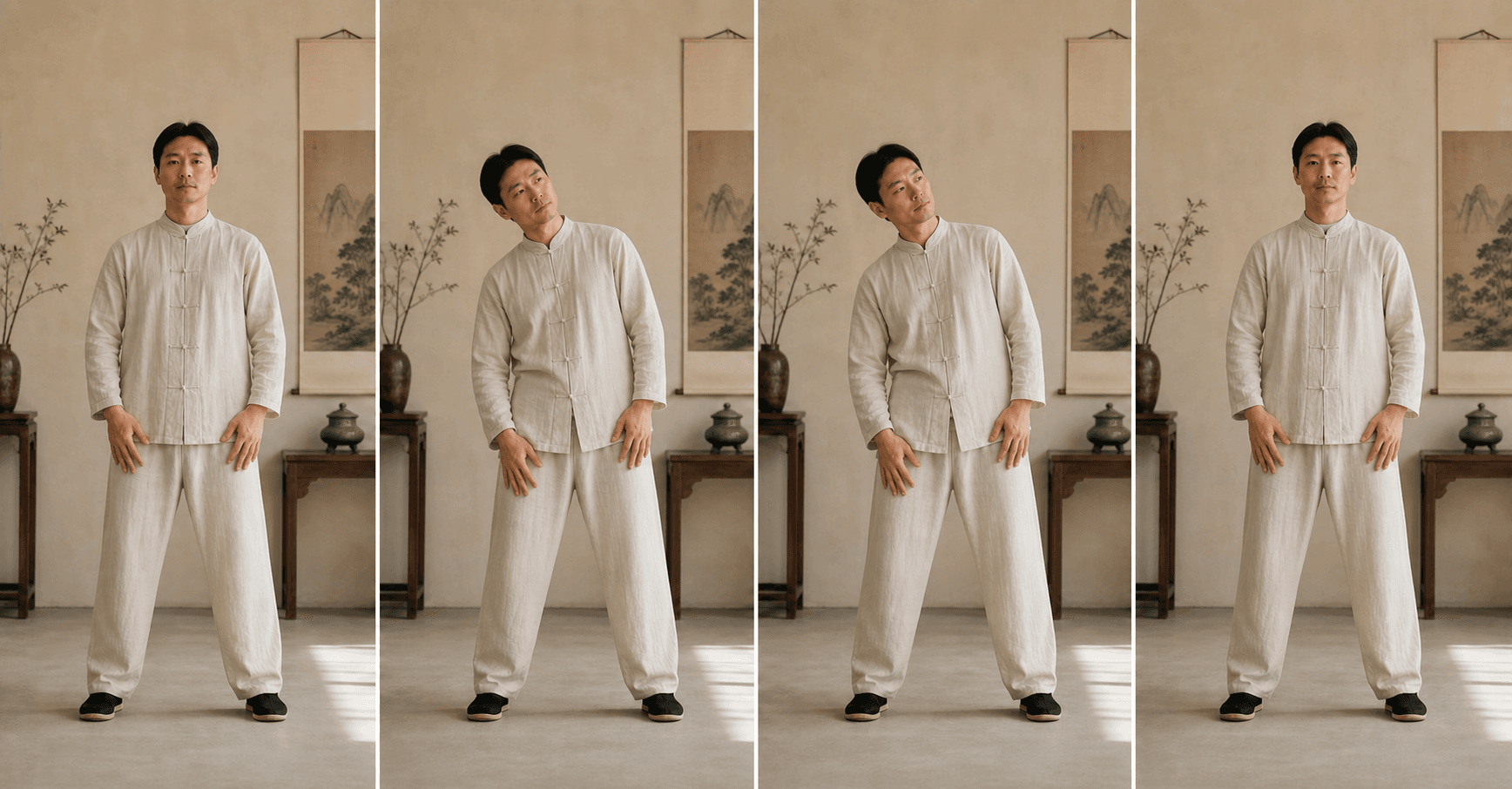
A lower-body and trunk movement that should stay mild for beginners and never be forced.
Full detail page next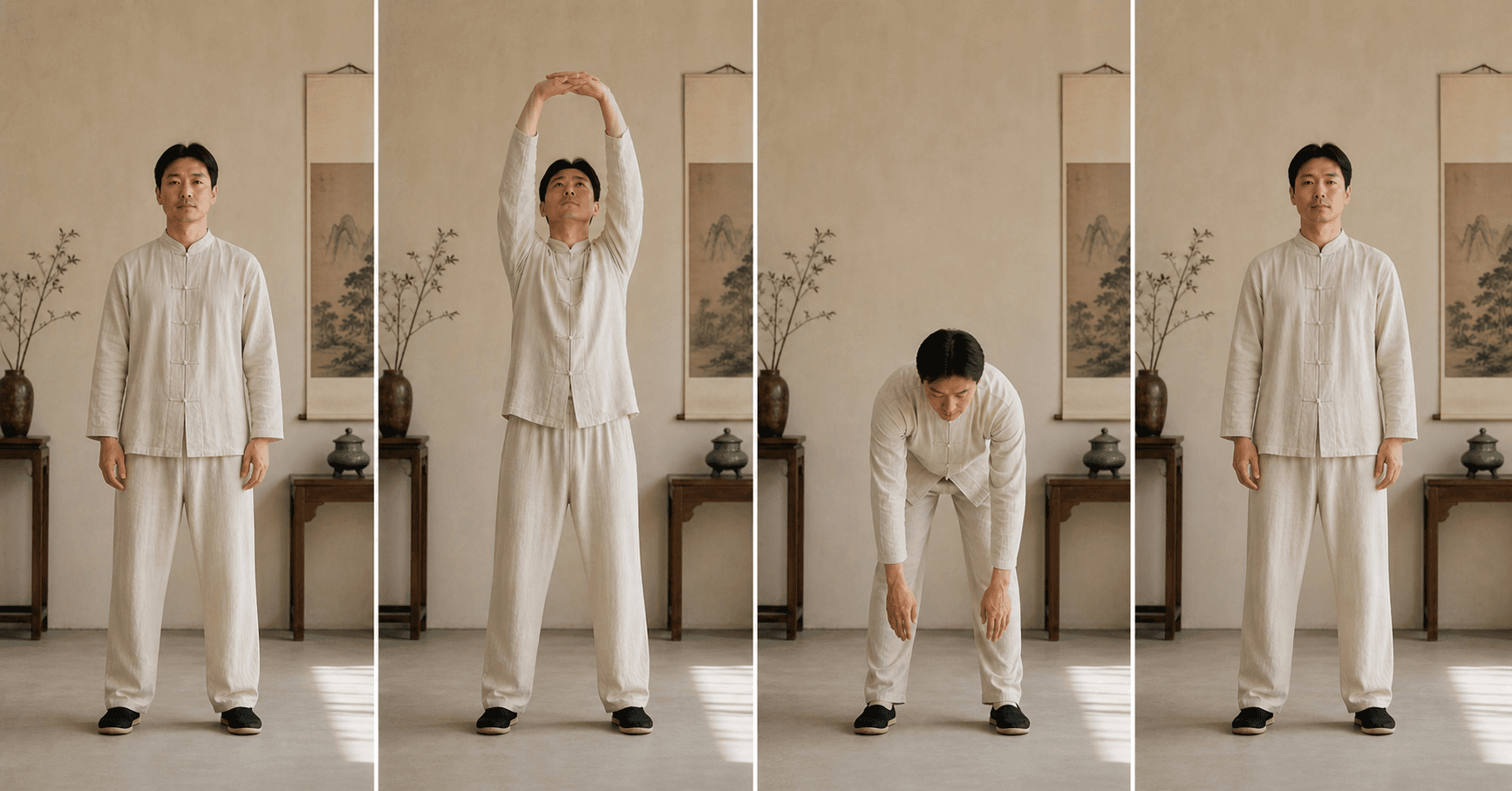
A forward-reaching pattern where comfort, balance, and gradual range matter more than depth.
Full detail page next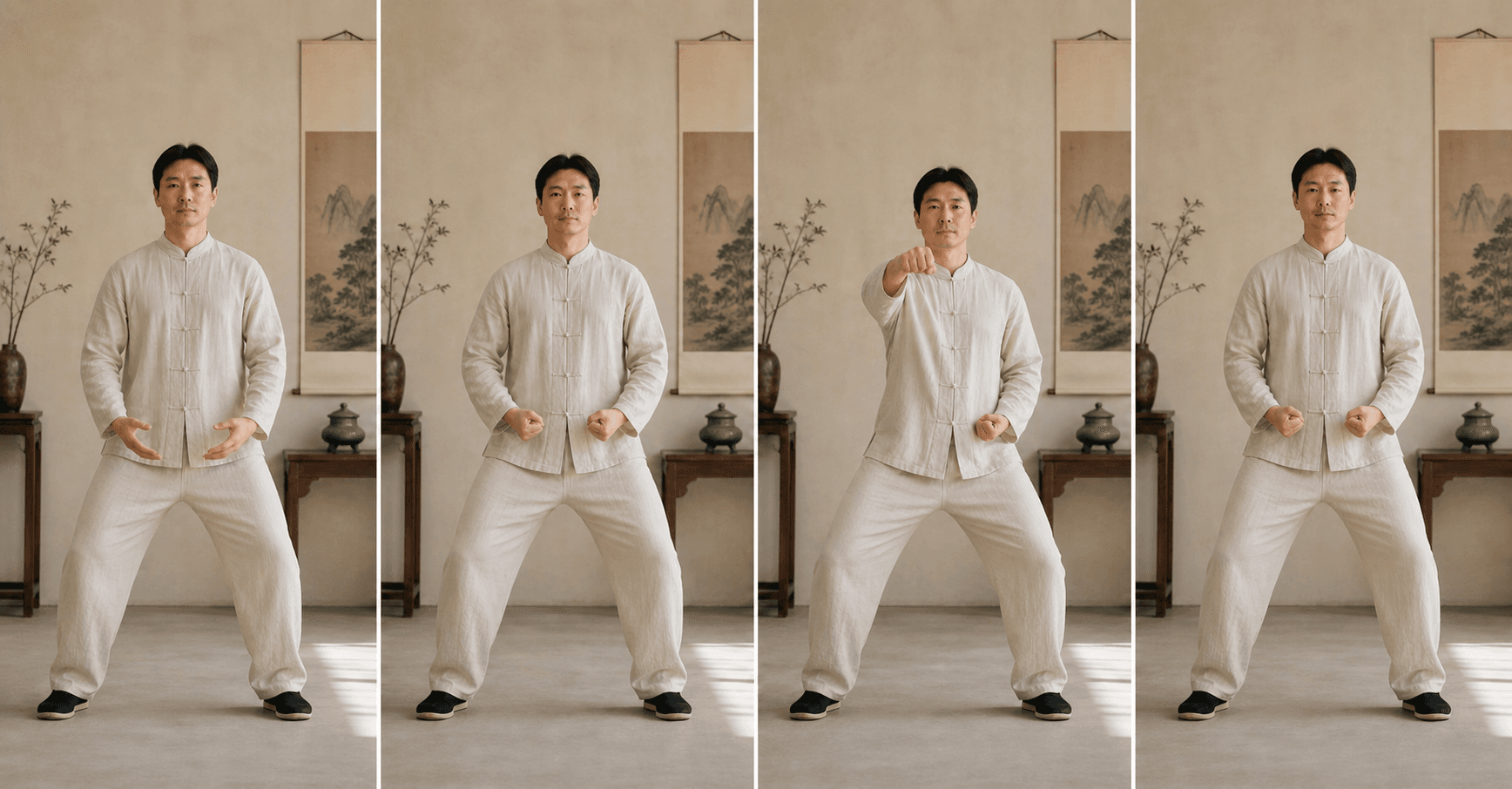
A more expressive movement in the set, practiced with steadiness rather than aggression.
Full detail page next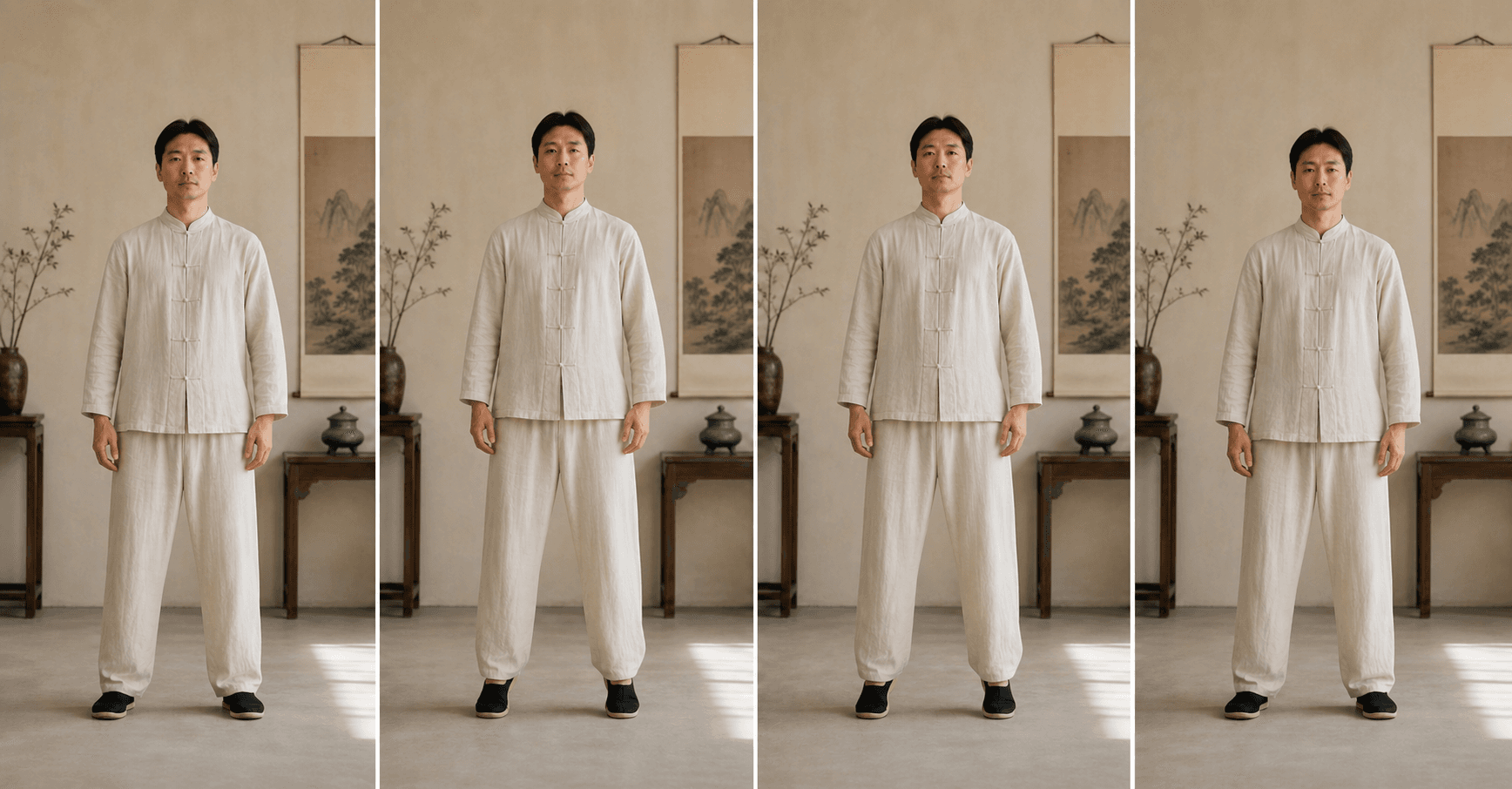
A closing bounce or heel-lift pattern that returns the body to simple rhythm and grounding.
Full detail page nextBeginner routine
A first session should be almost too easy. The value is in repeating the same clear pattern with attention, then slowly expanding the sequence.
Use the first movement for three slow rounds before learning the whole sequence.
Five to eight minutes is enough for a first test. The point is rhythm, not exhaustion.
Stop or reduce range if you feel pain, dizziness, chest tightness, shortness of breath, or unusual discomfort.
Source path
These references and internal paths help keep the page educational, safe, and connected to the broader Eastern Elements practice system.
A public health reference for the safety boundaries around slow movement practices such as tai chi and qigong.
Open NCCIHResearch contextA systematic review focused on reported adverse events and safety monitoring in Baduanjin studies.
Open PubMedEastern ElementsThe internal bridge from Daoist ideas into ordinary daily practice, restraint, breath, and conduct.
Read guidePracticeA quieter audio path for breath, focus, rest, and repeatable daily return.
Open audioBaduanjin, often translated as Eight Brocades Qigong, is a traditional Chinese movement sequence built from eight gentle exercises. Eastern Elements introduces it as a cultural movement practice for posture, breath, rhythm, and attention.
A careful answer is that Baduanjin belongs broadly to Chinese daoyin and qigong health-exercise traditions. It is often used inside Daoist-influenced cultivation contexts, but this page does not claim one exclusive lineage.
No. This page is educational and cultural. It does not diagnose, treat, or promise health outcomes. People with medical conditions, injuries, pregnancy, balance problems, or pain should adapt the practice or consult a qualified professional.
That is the intended direction. The first page establishes the sequence, safety language, and editorial structure before adding video, animation, or human demonstration assets.