A Small Book With A Large Afterlife
The received Tao Te Ching is traditionally arranged as a compact text of eighty-one short chapters. It is associated with Laozi, though modern scholarship treats its authorship and formation carefully rather than as a simple biography.
Its influence is large because the writing is brief, poetic, and flexible. A few lines can speak to government, conflict, self-cultivation, desire, language, leadership, and ordinary daily conduct.
The Title: Dao And De
The title joins two root words. Dao points to the Way: the course, path, or pattern before any single name can fully contain it. De points to virtue, integrity, power, or the quality that appears when life is closer to the Way.
This matters for beginners because the book is not only about abstract mystery. It is also about how power behaves, how a person acts, and how conduct changes when forcing is reduced.
Not A Fortune-Telling Manual
The Tao Te Ching is sometimes placed near other Chinese classics in popular imagination, but it should not be confused with the Yi Ching. The Yi Ching is a Book of Changes tradition built around hexagrams, lines, images, and divination history.
The Tao Te Ching is different. It teaches through paradox, image, contrast, and restraint. Eastern Elements reads it as a source for reflection and practice, not as a system for predicting fixed outcomes.
Why Mawangdui Matters
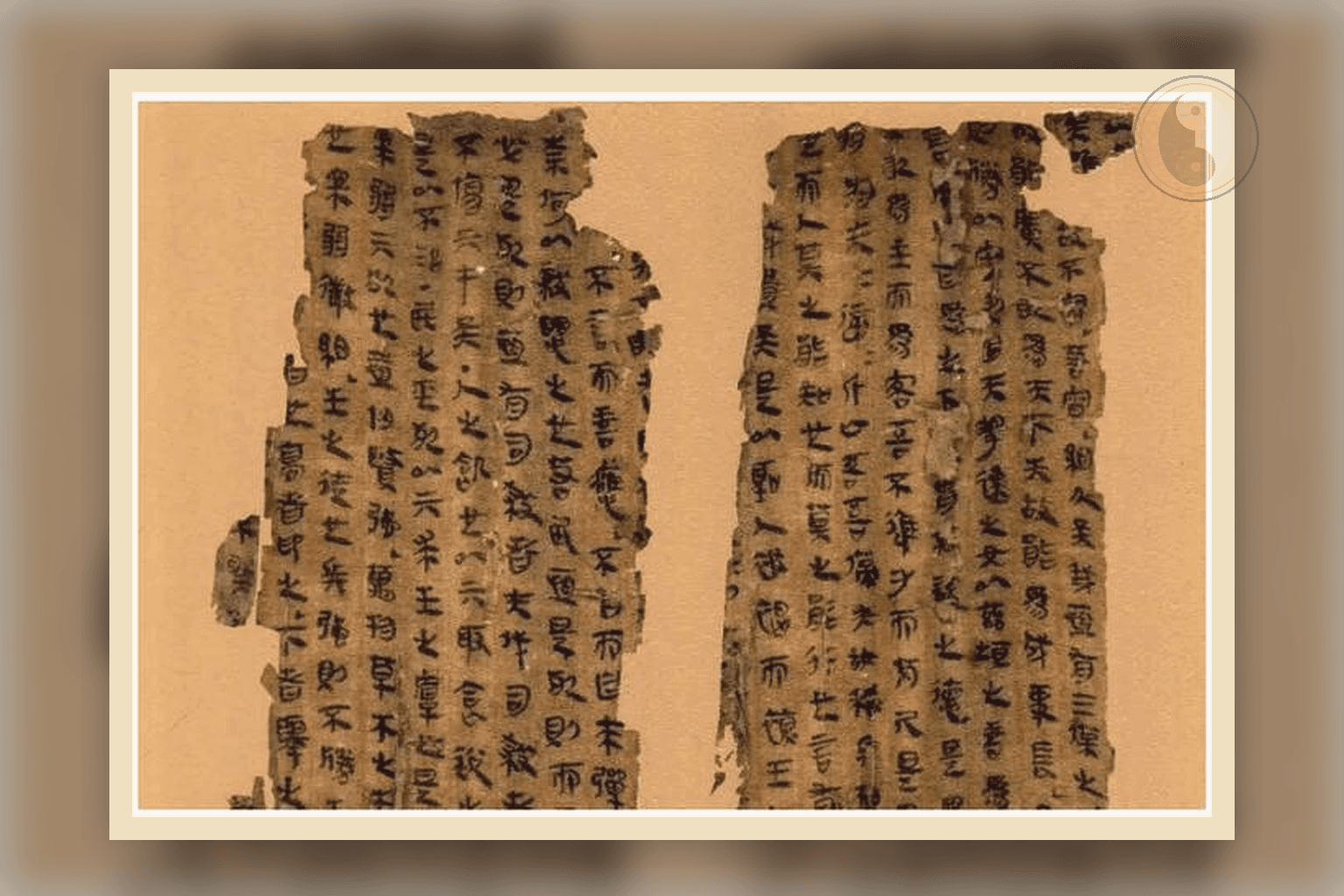
In 1973, early Han tombs at Mawangdui near Changsha yielded silk manuscripts that included two copies of the Laozi / Tao Te Ching. These manuscripts are important because they preserve an early textual layer.
One beginner-friendly point is the order. In the Mawangdui manuscripts, the De section appears before the Dao section. That does not make the received text useless. It gives readers another doorway: conduct and power before abstraction.
How To Read It Without Flattening It
A weak reading turns the Tao Te Ching into a poster of vague calm. A stronger reading keeps the texture: uncertainty, humility, concrete images, political edge, daily practice, and the limits of language.
Read one short passage, then ask one ordinary question. Where am I forcing? Where am I naming too quickly? Where would a softer, smaller, better-timed action be enough?
Why It Sits At The Root Of Eastern Elements
Eastern Elements is built from Dao outward. The reading tool, Five Elements language, Yi Ching reflections, Tao Qi Daily, and future products all need a root that keeps them from becoming superstition or personality labels.
The Tao Te Ching gives that root language: observe the Way, cultivate De, reduce unnecessary force, return to what is simple, and let practice matter more than display.
Read the overview with its anchors visible.
This page is a beginner doorway, so it keeps the deeper sources close: external scholarly references, the site source map, and related internal paths.
Everyday example
A person under pressure may use the Tao Te Ching badly by turning one line into a slogan: just relax, just flow, just do nothing. That flattens the text into advice without attention.
A better use is to read a passage, notice one concrete pressure point, and ask whether the next action can be smaller, quieter, clearer, or better timed. The reading becomes practice rather than decoration.
Terms to keep close
Dao
The Way, path, course, or natural unfolding that cannot be reduced to one label.
De
Integrity, virtue, or quiet power that arises from alignment with the Way.
Wu wei
Non-forcing action: doing what fits the moment without excess pressure.
Mawangdui
Early silk manuscripts that help readers remember the text has a transmission history.
Practice
The point is not to collect quotes, but to test one small change in conduct.
Historical notes
The text is traditionally associated with Laozi, while modern scholarship treats authorship, dating, and textual formation with caution.
The familiar received text is commonly arranged in eighty-one chapters, often beginning with the teaching that the Way that can be spoken is not the constant Way.
Mawangdui and other manuscript finds remind readers that the text moved through history, copying, ordering, and interpretation.
Common beginner questions
What is the Tao Te Ching in simple terms?
The Tao Te Ching is a concise Chinese classic about Dao, De, non-forcing action, simplicity, humility, and living with the natural course of things. A beginner can read it as a guide to attention and conduct, not as a rulebook.
Is Tao Te Ching the same as Daodejing?
Yes. Tao Te Ching and Daodejing are different romanizations of the same title. Tao Te Ching is the older familiar English form, while Daodejing follows modern pinyin more closely.
Is the Tao Te Ching a religious text or a philosophy book?
It can be read in several contexts. It is a central text for Daoist thought and has also shaped religious Daoist traditions, Chinese culture, political reflection, self-cultivation, and global philosophy. Eastern Elements introduces it as cultural learning and reflective practice.
Is the Tao Te Ching used for fortune-telling?
No. The Tao Te Ching is not a divination manual like the Yi Ching. It is better known for teachings on Dao, De, wu wei, simplicity, softness, and returning. Eastern Elements does not use it for fixed prediction.
Why does Mawangdui matter for the Tao Te Ching?
The Mawangdui silk manuscripts are early textual witnesses excavated in 1973 near Changsha. They remind readers that the Laozi / Tao Te Ching was transmitted through manuscript history, with differences in order and wording from the common received version.
What should a beginner read first?
Begin with a clear overview, then read one passage slowly. On Eastern Elements, a good path is this page, Tao vs Dao, Dao, Wu Wei, the Mawangdui context page, and then the first chapter reading on naming.