
Where the concept touches the text
Chapter 25
人法地,地法天,天法道,道法自然。
Human beings follow earth, earth follows heaven, heaven follows Dao, and Dao follows ziran.
Literal sense
自 · 然
Often glossed as self-so: being so from itself, not imposed from outside.
Keep these distinctions clear
Naturalness
Ziran is not just nature scenery. It is the self-so character of how things unfold.
No external forcing
It resists the idea that Dao is controlled by another higher principle.
Ethical implication
At the human level, it asks for conduct less distorted by desire and artificial display.
Linked to wuwei
Wuwei is one practical way of acting in accord with ziran.
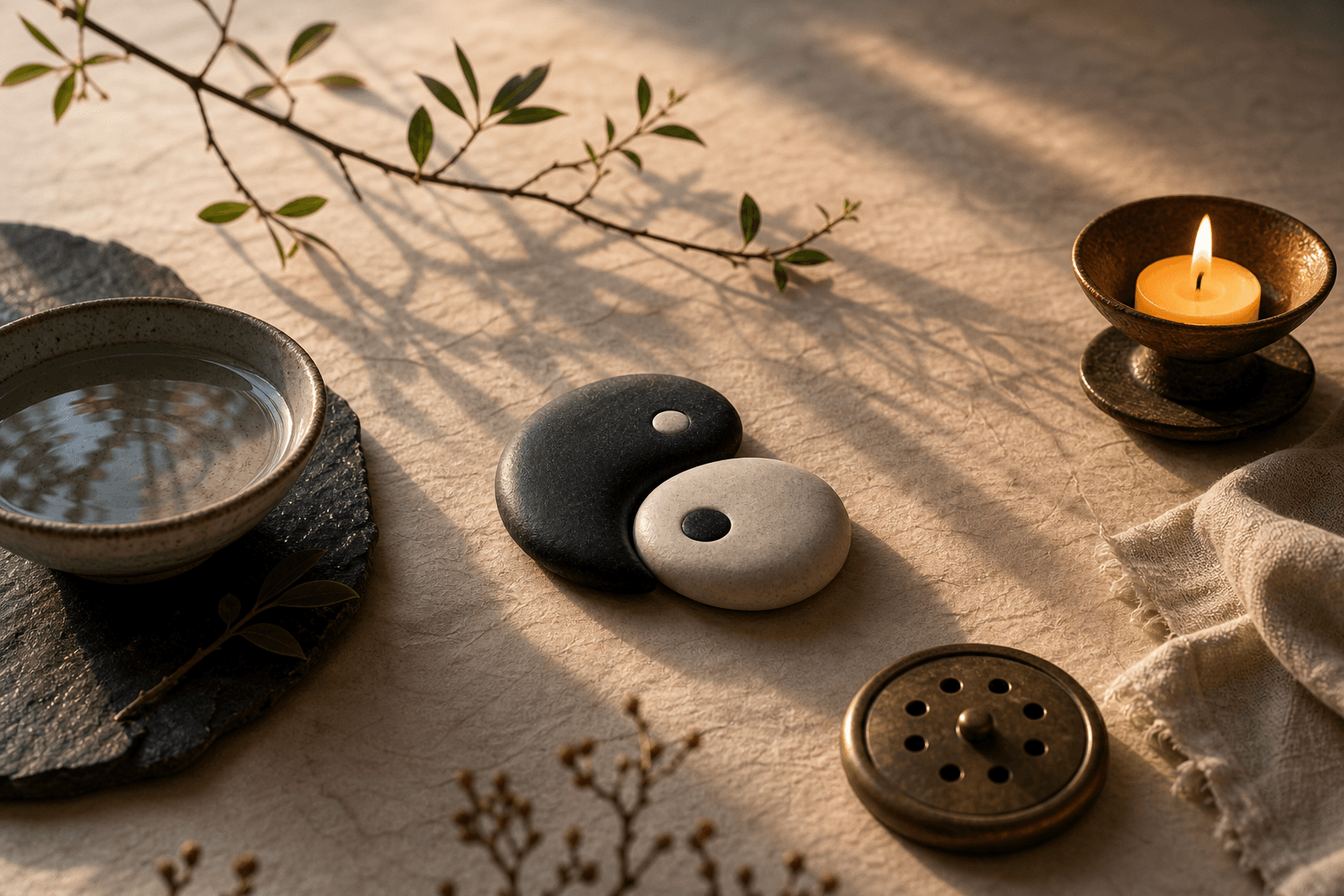
Naturalness is not a mood board
Modern readers may hear ziran as "being natural" in a casual lifestyle sense. The classical idea is deeper. It points to how things are so of themselves before excessive shaping, naming, or desire distorts them.
This is why ziran belongs at the root of the site. It supports the visual calm, but it is not merely an aesthetic.
Dao follows ziran
The chapter 25 line is difficult and important. It does not mean ziran is a deity above Dao. Many interpreters understand it as saying that Dao does not take its model from an external command.
This protects the tradition from turning Dao into a rigid supernatural rulebook. The point is a self-arising order, not a fixed slogan.
What ziran asks of practice
In practice, ziran asks: what is already true before I exaggerate, decorate, or force it?
It can make a reading more honest. Instead of using a result to create a new identity, the user asks what the result reveals about existing pattern and needed adjustment.
Try it without making it heavy
Choose one decision that feels over-shaped.
Remove the part added for image, fear, or approval.
Ask what remains when the situation is allowed to be simpler.
Questions to keep close
- What am I adding that the situation does not require?
- Where does my desire distort what is already clear?
- What would self-so simplicity look like here?