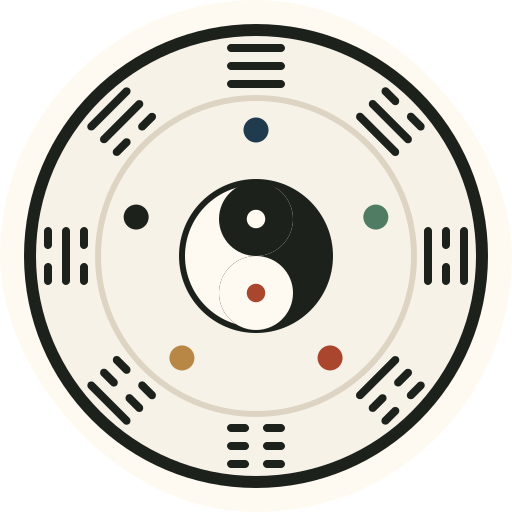

Four Pillars
A BaZi chart usually includes a year pillar, month pillar, day pillar, and hour pillar. Each pillar contains a Heavenly Stem and an Earthly Branch, which is why the chart is called Eight Characters.
The chart is a symbolic structure of time. It connects a birth moment with seasonal qi, Yin-Yang, the Five Elements, and the stem-branch calendar.
The four pillars are also read in relation to one another. The year can suggest wider background, the month often carries strong seasonal weight, the day gives the Day Master, and the hour may point to later development, inner life, or future-oriented themes.
Heavenly Stems And Earthly Branches
The Heavenly Stems combine Yin-Yang with the Five Elements, creating ten refined symbols such as Yang Wood, Yin Wood, Yang Fire, and so on. They are often used to describe visible qualities, direction, and the way an element expresses itself.
The Earthly Branches are twelve time markers connected with months, hours, seasonal qi, animals, and hidden element structures. In a careful introduction, the animal names are only the doorway. The deeper reading asks what elemental conditions are stored inside each branch.
Day Master
Many readings begin with the Day Master, the Heavenly Stem of the day pillar. It offers a useful anchor for discussing temperament, rhythm, and cultivation.
A responsible reading does not turn the Day Master into a final identity. It looks at the whole chart: support, pressure, season, balance, and context.
For example, a Yang Wood Day Master is not simply a "tree personality." The question is whether that Wood is rooted, supported by Water, warmed by Fire, shaped by Metal, or overburdened by the surrounding structure.
Seasonality Before Personality
BaZi is often misunderstood as personality typing. At its best, it begins with seasonality. Is Wood young or mature? Is Fire supported or excessive? Is Water flowing or frozen by context?
This makes the system closer to a weather map than a label. It asks what conditions support growth and what conditions create strain.
The month pillar is especially important because it carries the seasonal environment. The same element can feel very different in spring, summer, autumn, or winter, just as the same seed behaves differently in warm rain, dry heat, cold soil, or strong wind.
Balance, Pressure, And Support
A chart can show support, pressure, expression, resources, constraints, and competing demands. Some traditions describe these relationships through technical categories, but beginners can start with a simpler question: what strengthens the central pattern, and what asks it to mature?
This is where BaZi becomes more than a list of elements. Too much support may become comfort without movement. Too much pressure may become discipline or strain depending on context. Too much expression may become creativity or exhaustion. The meaning depends on relation.
A Responsible Frame
A modern BaZi-inspired product should avoid fatalistic promises. The better use is reflection: strengths, imbalances, timing, and practical self-cultivation.
For this site, BaZi language can eventually support richer paid reports, but the free education should first make the tradition clear, modest, and non-fear-based.
A good report should translate technical structure into useful reflection: where a person may feel supported, where they may overcompensate, which rhythms restore balance, and which choices deserve slower timing.
Everyday example
A BaZi-inspired reading might notice that a person has strong planning energy but less obvious support for rest, receptivity, or emotional recovery. A responsible interpretation would not declare a fixed destiny. It would translate the pattern into a cultivation theme.
For example, the practical advice might be to build more Water-like rhythm into the week: quiet review, sleep protection, listening before action, and fewer decisions made while overstimulated. The chart becomes a mirror for adjustment, not a sentence over the future.
Terms to keep close
Heavenly Stems
Ten symbols that combine Yin-Yang with the Five Elements.
Earthly Branches
Twelve symbols connected with time, season, animals, and hidden element structures.
Day Master
The Heavenly Stem of the day pillar, often used as the central reference point of the chart.
Month pillar
Often important because it shows seasonal strength and environmental support.
Hidden elements
Elemental qualities stored inside Earthly Branches, adding depth beneath the visible pillars.
Useful element
A practical reading may ask which quality helps the chart regain balance.
Historical notes
BaZi depends on the stem-branch calendar, a long-standing Chinese system for naming cycles of time.
The tradition developed as a way to interpret birth time through Yin-Yang, Five Elements, seasonality, and relational patterns.
Outside specialist contexts, BaZi is best introduced carefully: educational, reflective, and never used to frighten or limit a person.